Senior Data Scientist · AbbVie
2025–Present
Statistical Innovation and Data Science & Analytics. AI and quantitative methods for biomedical research.
U.S. Citizen
AI & Statistical Machine Learning Researcher
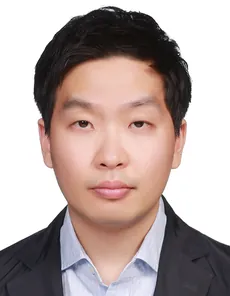
I am a Senior Data Scientist at AbbVie, working at the intersection of statistics, machine learning, and biomedical research. My interests include multimodal learning, explainable AI, large language models (LLMs), agentic AI, and causal inference.
Much of my research focuses on developing machine-learning and AI methods to integrate information from different sources and understand which features and relationships drive the results. During my doctoral research, I developed COSIME, a framework for interpretable multi-view integration published in Nature Machine Intelligence, and CoTF-reg, a method for investigating cooperative gene regulation published in Communications Biology.
One of my greatest strengths is my extensive experience across both industry and academia, which has equipped me with a strong understanding of both business and scientific research. I also bring leadership experience from a variety of roles, including serving as an intelligence officer in the military.
I continually seek to develop and apply innovative tools that make a tangible impact in the real world.
Public research and broad methodological interests. Confidential employer-specific research details are excluded pending review.
Deep learning for cooperative multi-view data integration, scalable feature interpretation, and investigation of relationships across data views.
Multi-omicsInterpretable MLIdentification of cooperative transcription factors in oligodendrocyte gene regulation using single-cell multi-omics.
Single-cell dataGenomicsStatistical learning and deep learning for time-to-event prediction, causal inference, and interpretable biomedical modeling.
Survival analysisCausal inferenceKnowledge-guided AI using scientific literature, retrieval-augmented generation, and tool-using agent workflows.
LLMsAgentic AIRAGQuantifying the information content and utility of large, heterogeneous datasets through statistical and machine-learning methods.
Information theoryStatistical MLJoint modeling of transcriptomic, metabolomic, genomic, and clinical information to investigate biological mechanisms and predict phenotypes.
Biomedical AIMulti-view learningTwo Waisman Center stories describe the ideas and potential applications behind my published machine-learning frameworks.
“COSIME: Cooperative multi-view integration and a Scalable and Interpretable Model Explainer” · Highlights presentation · October 2025
Complete publication list from my CV, including manuscripts in preparation and accepted work.
Choi JJ, Lu T
In preparation
Taylor S, Christ L, Xu Y, Dursun C, Choi JJ, et al.
In preparation
Cohen Kalafut N, He C, Sheng J, Chandrashekar PB, Choi J, Wang D
Nature Computational Science (2026) · Accepted · Preprint ↗
Arachchilage KH, Risgaard RD, Sheng J, Kumarage P, Li X, Choi JJ, et al.
Genome Biology (2026) · Paper ↗
Choi JJ, Engelman CD, Lu T
Journal of Alzheimer's Disease (2026) · Paper ↗
Choi JJ, Cohen Kalafut N, Gruenloh T, Engelman CD, Lu T, Wang D
Gupta C, Cohen Kalafut N, Clarke D, Choi JJ, et al.
Cell Genomics (2025) · Paper ↗
Choi JJ, Svaren J, Wang D
Choi JJ, Koscik RL, Jonaitis EM, Panyard DJ, Morrow AR, et al.
Shang L, Zhao W, Wang YZ, Li Z, Choi JJ, et al.
My research connects statistics, machine learning, bioinformatics, and epidemiology to develop methods that work across disciplines.
Six interactive methods. Choose a topic to expand its demonstration; close it to return to the overview. All examples use synthetic data.
Two generic data views feed separate neural encoders. Watch a new synthetic sample change the latent representations, their integration, and the predicted outcome together.
Scientific evidence is retrieved and grounded in a language model; an agent can evaluate the output and choose whether to refine retrieval or modeling. Explore a representative decision cycle.
Observed cohort survival and model-predicted OS are displayed together. As synthetic follow-up information changes, the predicted survival curve and uncertainty interval update while Kaplan–Meier remains the observed reference.
Compare feature importance, supporting literature evidence, and stability across three predictive models using the same synthetic features.
See a reward-driven tool policy update: the chosen action receives feedback, its value estimate changes, and the action probabilities and running reward history reflect the same episodes.
Follow an intervention through the direct path and the mediator pathway. Change path coefficients to see mediation effects, or switch to ATT for a synthetic comparison of observed and counterfactual outcomes among treated units.
Statistical Innovation and Data Science & Analytics. AI and quantitative methods for biomedical research.
Interpretable machine learning, multi-omics integration, and statistical modeling.
Worked as a Research Area Specialist in epidemiology and as a research assistant with the Statistics Online Computational Resource (SOCR), developing statistical and machine-learning methods for data valuation, genomics, neuroimaging, and population health. Also conducted analytical research in child welfare and educational outcomes.
Risk modeling, financial forecasting, and analytics.
Minor: Genomics and Data Science
Dissertation: “Developing and Applying Machine Learning and Artificial Intelligence Approaches to Leverage Multi-Omics to Advance Understanding of Alzheimer’s Disease Pathology”
Proposed and led statistical and machine-learning framework development at AbbVie, collaborating across data science and statistics teams.
Research leadershipCross-functional collaborationAt SK Group, briefed senior leadership, including the CEO, on portfolio risk and strategic decisions, and worked with global business partners.
Strategic communicationQuantitative decision supportServed as an intelligence officer in the Korean Army, leading planning and training efforts. Also taught as a graduate teaching assistant across four semesters.
Team leadershipTeaching